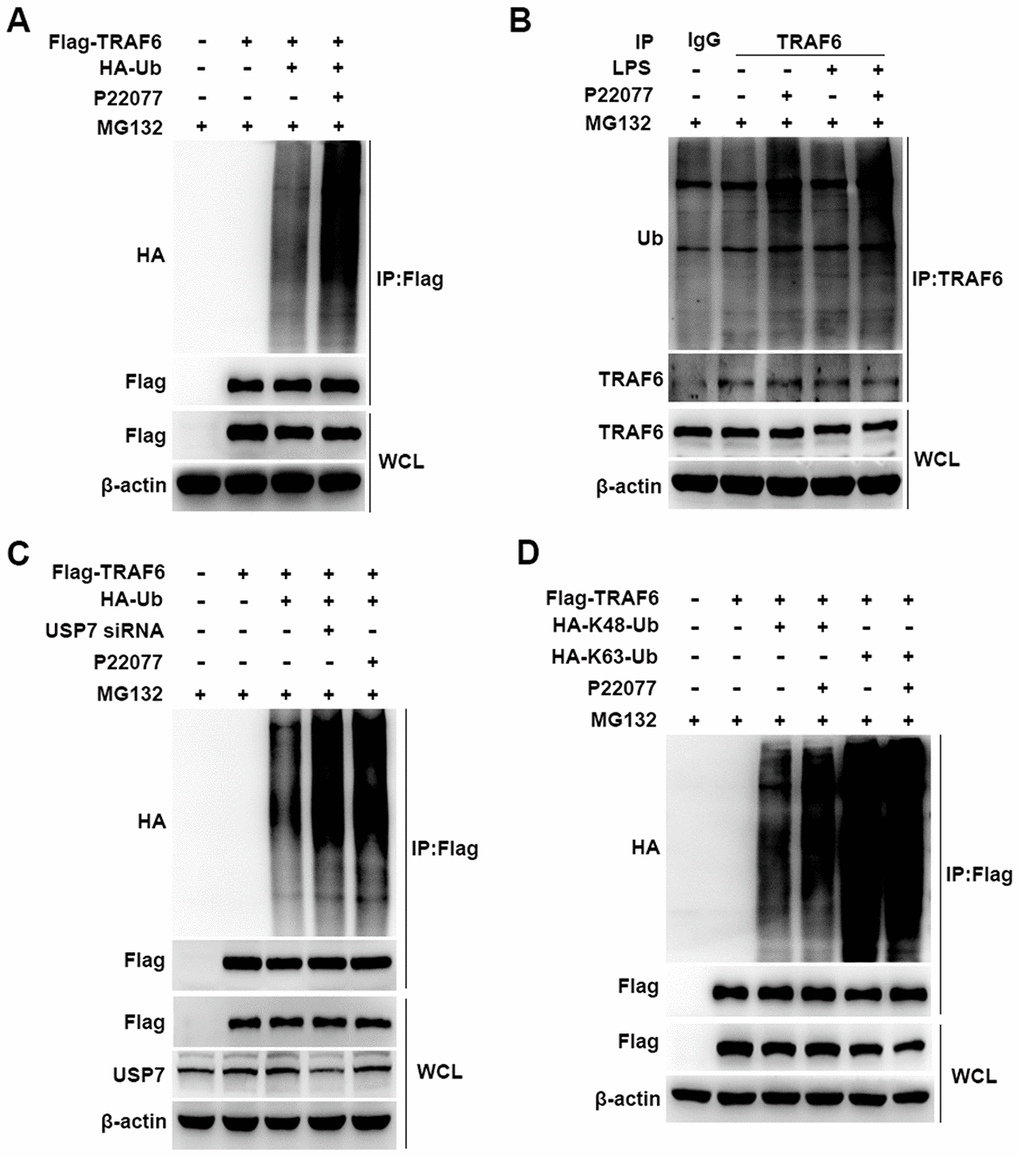
Figure 6.P22077 promotes the K48-linked ubiquitination of TRAF6. (A) HEK293T cells were transfected with Flag-TRAF6 and HA-Ub plasmid for 24h and then treated with P22077 (7.5 μM) and MG132 (20 μM) for 6 h, immunoprecipitation assay was used to detect ubiquitination level of TRAF6. (B) Mouse peritoneal macrophages were pretreated with P22077 (7.5 μM) and MG132 (20 μM) for 2 h, and then stimulated with LPS (100 ng/mL) for 1 h. Immunoprecipitation assay was used to analysis of TRAF6 protein ubiquitination level. (C) HEK293T cells were knockdown USP7, and transfected with Flag-TRAF6, HA-Ub, and then treated with P22077 (7.5 μM) and MG132 (20 μM) for 6 h, immunoprecipitation assay was used to detect the ubiquitination level of TRAF6. (D) HEK293T cells were transfected with Flag-TRAF6, HA-K48-Ub and HA-K63-Ub plasmid for 24h and then treated with P22077 (7.5 μM) and MG132 (20 μM) for 6 h, immunoprecipitation assay was used to detect the K48 and K63 sites of TRAF6 ubiquitination. Similar results were obtained from three independent experiments and data were presented of one representative experiment.