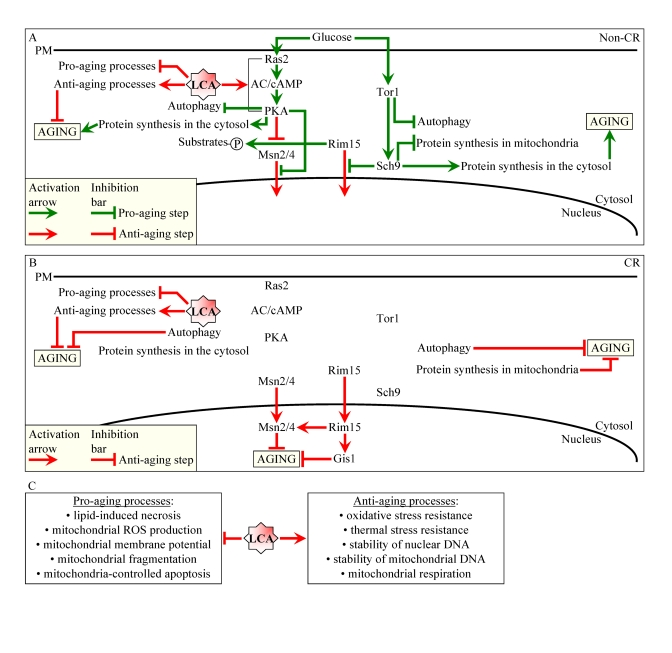
Figure 1.Lithocholic acid (LCA) extends longevity of chronologically aging yeast through two different mechanisms.(A
and B) Outline of pro- and anti-aging processes that are controlled
by the TOR and/or cAMP/PKA signaling pathways and are modulated by LCA in
yeast cells grown under non-CR (A) or CR (B) conditions.
Activation arrows and inhibition bars denote pro-aging (displayed in green
color) or anti-aging (displayed in red color) processes. Under both non-CR
and CR conditions, LCA targets housekeeping longevity assurance processes
listed in (C). Under non-CR conditions only, LCA also targets the
adaptable cAMP/PKA pathway. By activating PKA-dependent phosphorylation of
the cytosolic pool of the key nutrient-sensory protein kinase Rim15p, LCA
causes the inactivation of Rim15p. The resulting reduction of the
phosphorylation status of several Rim15p target proteins in the cytosol
lowers their pro-aging efficacy. Abbreviations: CR, caloric restriction;
PM, plasma membrane.