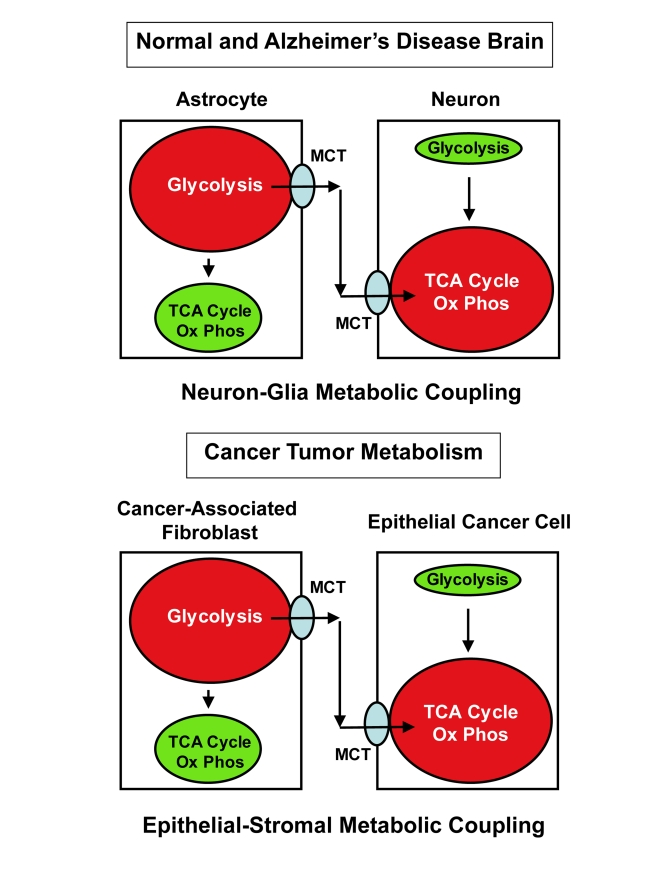
Figure 4.Comparisons between the "Reverse Warburg Effect" and "Neuron-Glia Metabolic Coupling", suggest "Epithelial-Stromal Metabolic Coupling".
In "Neuron-Glia Metabolic Coupling", astrocytes take up more glucose, shift towards aerobic
glycolyis, secrete pyruvate and lactate, which is then taken up by adjacent
neurons and then "feeds" into the neuronal TCA cycle, resulting in
increased neuronal oxidative mitochondrial metabolism, and higher ATP
production in neurons. In essence, the astrocytes function as support cells
to "feed" the adjacent neuronal cells. This schematic diagram shows that
"Neuron-Glia Metabolic Coupling" and the "Reverse Warburg Effect" are
analogous biological processes, where the astrocytes are the
cancer-associated fibroblasts and the neurons are the epithelial tumor cells. Thus, the "Reverse Warburg Effect"
could also be more generally termed "Epithelial-Stromal Metabolic Coupling"
or "Epithelial-Fibroblast Metabolic Coupling". This figure was partially
re-drawn from Bonucelli et al. 2010, with permission [24]. MCT,
mono-carboxylate transporter.
Figure 4 — Transcriptional evidence for the "Reverse Warburg Effect" in human breast cancer tumor stroma and metastasis: Similarities with oxidative stress, inflammation, Alzheimer's disease, and "Neuron-Glia Metabolic Coupling" | Aging